

A SEDEX audit in 2026 is no longer a simple checkbox exercise; it’s a rigorous evaluation of your management systems that determines the future of your international contracts. With over 250,000 site-level issues resolved through the platform in 2025 alone, the pressure to demonstrate ethical compliance has never been higher. Many suppliers find themselves caught between the technical nuances of 2-pillar and 4-pillar requirements while worrying that a single oversight could jeopardize key partnerships. It’s a high-stakes environment where finding an accredited, globally-minded auditor is essential for maintaining operational stability and buyer trust.
This professional decision guide is designed to help you master these complexities and secure your standing with international buyers. You’ll gain a clear roadmap for correcting non-conformities and ensuring your facility meets the latest SMETA 7.0 workplace requirements. We’ll examine the transition from basic compliance checks to sophisticated management system assessments, providing the clarity needed to choose the right path for your business. By the end of this guide, you’ll have the practical insights required to navigate the auditing process with precision and achieve a successful report upload to the Sedex platform.
Key Takeaways
- Identify the strategic shift in SMETA 7.0 toward management system maturity to ensure your facility aligns with 2026 global ESG regulations.
- Evaluate the specific requirements of 2-Pillar versus 4-Pillar assessments to select the audit level that best satisfies your buyers’ ethical transparency demands.
- Implement a rigorous internal gap analysis and worker interview protocol to mitigate the risk of non-conformities during your scheduled SEDEX audit.
- Verify the APSCA credentials and local operational capacity of your chosen Affiliate Audit Company to ensure a reliable and impartial verification process.
- Streamline the path to a successful report upload on the Sedex platform to strengthen your reputation as a trusted partner in the global supply chain.
Supply Chain Risk Management: The Strategic Role of SEDEX Audits in 2026
SMETA, or the Sedex Members Ethical Trade Audit, serves as the primary methodology for evaluating social performance within the Sedex ecosystem. It’s essential to distinguish between membership and the audit itself. Being a Sedex Member allows access to the platform and data sharing tools; however, undergoing a SEDEX audit provides the verified data required by international buyers to satisfy 2026 ESG and due diligence regulations. SMETA is a standardised social audit methodology based on the ETI Base Code.
In 2026, the regulatory environment for global trade has become increasingly complex. International buyers are now legally obligated by frameworks such as the EU Corporate Sustainability Due Diligence Directive (CSDDD) to monitor their supply chains for human rights violations. A SEDEX audit acts as a critical risk management tool in this context. It provides a structured, objective report that buyers use to demonstrate their own compliance with these mandatory transparency laws. Without such verification, suppliers risk being excluded from high-value markets that demand rigorous social accountability.
The ETI Base Code: The Foundation of Social Compliance
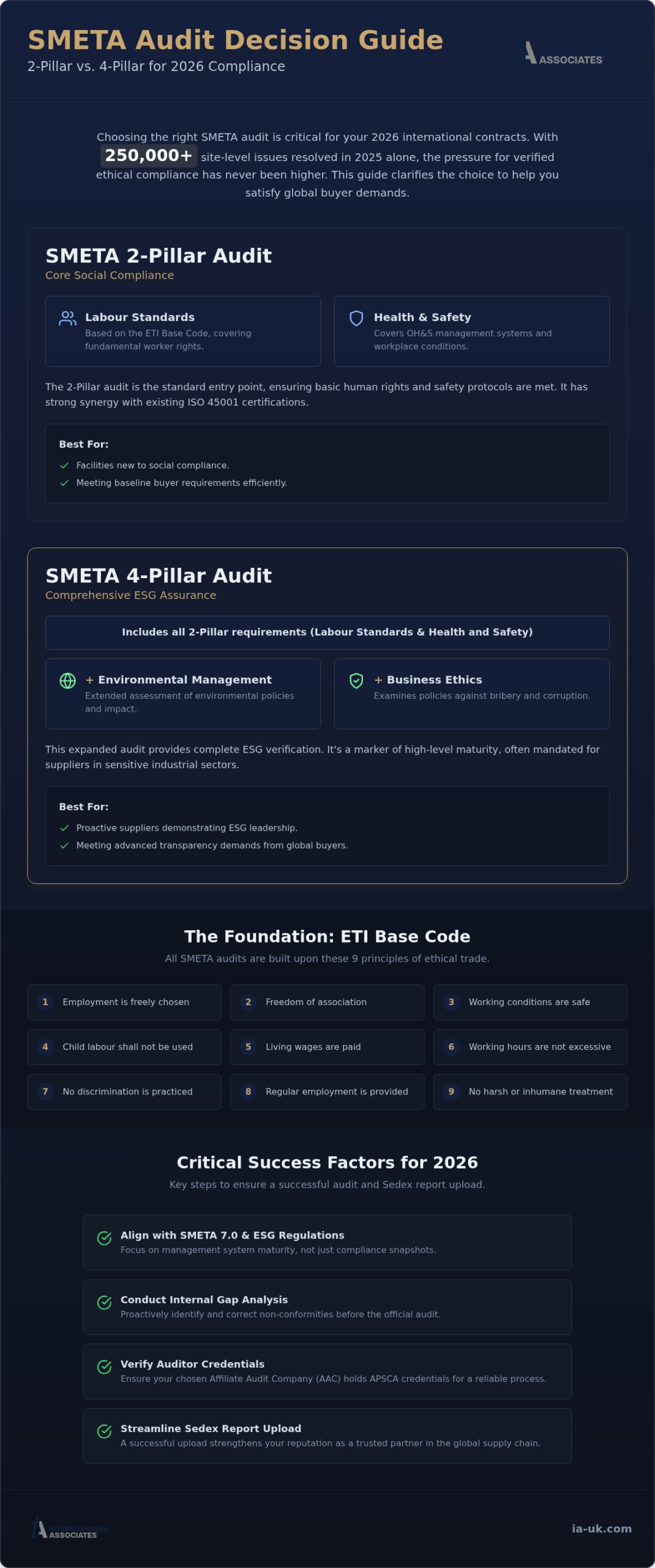
The Ethical Trading Initiative (ETI) Base Code provides the foundational standards for most modern social compliance frameworks. These nine pillars, covering areas like child labour, living wages, and health and safety, are translated into measurable criteria during a social audit. In 2026, the focus has shifted toward management system maturity. Auditors now look for evidence of continuous improvement rather than just a snapshot of compliance. This shift, codified in SMETA 7.0, helps identify harder to detect issues like forced labour by assessing the maturity of factory policies and their real world application.
Commercial Advantages of Verified Ethical Performance
Suppliers gain a distinct competitive edge through verified ethical performance. The primary advantage is the reduction of audit fatigue. By sharing a single SMETA report with multiple global buyers via the Sedex platform, businesses avoid the cost and disruption of redundant inspections. This transparency builds a foundation of trust that is difficult to replicate through self-reporting. Partnering with a UK-based auditing body provides an extra layer of independent verification that resonates with global procurement teams. For those seeking to deepen their understanding of these frameworks, our guide on Social Accountability Audits: The Definitive Global Guide for 2026 offers comprehensive insights into the evolving landscape of ethical trade.
SMETA 2-Pillar vs. 4-Pillar: Choosing the Right Audit Level
Selecting the appropriate level for your SEDEX audit is a critical decision that impacts your facility’s commercial viability and operational transparency. While both modules are based on the same SMETA methodology, they serve different strategic objectives. The 2-Pillar audit covers the fundamental requirements of the ETI Base Code, whereas the 4-Pillar audit expands the scope to include environmental management and business ethics. For many global suppliers, the choice is often dictated by buyer mandates. However, proactive adoption of the 4-Pillar standard is increasingly viewed as a marker of high-level maturity in sensitive industrial sectors.
The 2-Pillar Audit: Core Social Compliance
The 2-Pillar audit focuses exclusively on Labour Standards and Occupational Health and Safety (OH&S). It serves as the standard entry point for facilities beginning their social compliance journey. This module ensures that basic human rights and safety protocols are being met on the factory floor. There’s a significant synergy between this audit and management system certification, particularly for those who already hold ISO 45001 certification. Having an established OH&S system simplifies the audit process, as many required documents and safety procedures are already verified. If your primary goal is to satisfy a specific buyer’s baseline requirement, the 2-Pillar option provides a focused and efficient assessment path.
The 4-Pillar Audit: Comprehensive ESG Assurance
The 4-Pillar audit adds two distinct modules: Environmental Management (Extended) and Business Ethics. In 2026, this level of assurance has become the default for high-risk sectors such as chemicals, mining, and large-scale manufacturing. These additional pillars align with the EU Corporate Sustainability Due Diligence Directive (CSDDD), which requires companies to identify and mitigate environmental risks throughout their supply chain. Choosing the 4-Pillar audit proactively demonstrates a commitment to business integrity that goes beyond simple compliance. It positions your facility as a premium partner for global brands that prioritise comprehensive ESG reporting. Before deciding, you should verify whether your target buyers require “extended” environmental data, as a 2-Pillar report may not be sufficient for their disclosure needs.
A cost-benefit analysis often reveals that the 4-Pillar audit is the more economical choice in the long term. While the initial on-site duration might be slightly longer, it prevents the need for separate environmental or ethics assessments later. This holistic approach reduces administrative friction and presents a unified view of your facility’s ethical standing. To ensure your facility is prepared for either level, you can review our social accountability services to align your internal systems with global standards.
Preparing for Your SMETA Audit: Navigating the Compliance Roadmap
Preparation for a SEDEX audit is a strategic undertaking that demands meticulous attention to management system maturity. It’s not merely about passing a point-in-time inspection; it’s about demonstrating sustained ethical performance through verifiable data. A robust internal gap analysis against the SMETA checklist is your first line of defense. This process reveals systemic weaknesses in payroll, working hours, and safety protocols that might otherwise lead to costly non-conformities during the official assessment.
Worker interviews remain a cornerstone of the SMETA methodology. Auditors use these private discussions to verify that your documentation matches the lived experience of the workforce. It’s essential to foster an environment of transparency where employees feel confident speaking without fear of retaliation. Establishing clear non-retaliation policies and ensuring workers understand their rights is often what separates a verified facility from one struggling with significant reputational risks.
Step 1: Documentation and Management Systems
Documentation is the backbone of social accountability. All legal compliance documents, including employment contracts, insurance policies, and local business licenses, must be current and accessible. Implementing a structured management system provides the necessary framework for this level of organisation. You can explore Management System Certification to establish the foundational quality standards required for global trade. All technical documentation should be indexed and ready for immediate review to avoid administrative delays during the audit process.
Step 2: The Physical Site Inspection
Health and safety pitfalls often occur in high-traffic areas of the facility. Common issues include blocked fire exits, improper chemical storage, and inconsistent use of personal protective equipment (PPE). For those undergoing a 4-pillar SEDEX audit, environmental controls for waste management and emissions are also scrutinised. A practical strategy is to conduct a comprehensive mock walk-through 30 days before the scheduled audit. This provides sufficient time to rectify physical hazards and ensure all safety signage is legible and correctly placed across the site.
Step 3: Post-Audit Corrective Actions
Findings in the final report are categorised as Minor, Major, or Critical. Minor non-conformities are often isolated incidents, while Major findings indicate systemic failures in management policies. Critical issues represent immediate risks to workers or the environment and require urgent attention. To manage the Corrective Action Plan Report (CAPR), assign a specific internal owner to each finding and upload verification evidence to the Sedex platform promptly. Effectively closing these issues is vital for maintaining your status as a reliable supplier and securing the long-term trust of international buyers.
Critical Factors for Selecting a Sedex Affiliate Audit Company (AAC)
Selecting the right Affiliate Audit Company (AAC) is the final hurdle in ensuring your SEDEX audit delivers maximum commercial value. In 2026, the marketplace is crowded with providers; however, businesses must distinguish between mere report generators and professional verification bodies. A superior auditor doesn’t just list non-conformities. They provide the technical clarity required to address systemic issues within your specific industry. This expertise prevents the “audit mill” trap where reports lack the depth needed to satisfy sophisticated global buyers. Your choice of partner directly reflects your commitment to transparency and international growth.
Language skills and cultural context are equally vital during the assessment process. An auditor who speaks the local dialect can conduct more effective worker interviews, uncovering nuances that a translator might miss. This “Global-Local” duality ensures that the audit is culturally sensitive yet remains aligned with international standards. It’s a balance that requires a firm with both a central administrative base and an expansive network of regional professionals.
APSCA Credentials and Auditor Competency
Verification through the Association of Professional Social Compliance Auditors (APSCA) is now a non-negotiable requirement for any credible assessment. You should confirm that your lead auditor holds the Certified Social Compliance Auditor (CSCA) status. This credential ensures the individual has passed rigorous exams and possesses the field experience necessary for high-stakes assessments. Reports signed by CSCA-certified professionals carry significantly more weight with retailers in the UK and Europe because they represent a verified level of competency. International Associates maintains a deep commitment to these standards through our extensive accreditations and memberships, ensuring every assessment is conducted with institutional weight and impartiality.
Technical Support and Global Network
Operational efficiency is often determined by a firm’s IT infrastructure. Advanced systems allow for quicker report processing and faster certificate issuance, which is critical for maintaining supply chain continuity. Having a head office in Glasgow provides a steady hand for regulatory oversight, while regional offices in Asia and the Middle East offer local-cost auditing without compromising on quality. This structure also facilitates integrated audits. Combining a SEDEX audit with ISO 9001 quality management assessments reduces administrative friction and provides a holistic view of your facility’s performance. It’s an efficient way to manage multiple certifications under one professional umbrella.
If you’re ready to secure your ethical standing and build buyer trust, you can book your SMETA audit with International Associates to benefit from our global network and technical expertise.
Global Verification: Leveraging International Associates for Social Accountability
International Associates functions as an independent, ethical guardian of global standards, bridging the gap between complex regulations and sustainable business growth. Our identity is defined by a unique global-local duality; we combine the institutional reliability of our Glasgow headquarters with the operational capacity of regional offices across Europe, Asia, and the Middle East. This structure ensures that your SEDEX audit is overseen by high-level experts while being executed by auditors who understand local industrial contexts. It’s a sense of quiet, earned confidence that comes from handling high-stakes certifications for sensitive and highly regulated sectors.
The brand presents itself as a sophisticated bridge between complex global regulations and the businesses that must adhere to them. There is a consistent emphasis on trust and independence, which creates an atmosphere of security and expertise. By choosing a partner with a worldwide reach, you ensure that your ethical standing is verified by a body recognized by international procurement teams. This global presence is a foundational pillar of our identity, providing the stability and confidence needed to navigate the 2026 compliance landscape without unnecessary friction.
Efficient Auditing via Advanced IT Infrastructure
Suppliers often face significant administrative burdens when managing compliance data across multiple jurisdictions. We utilize a modern IT infrastructure to streamline the verification process, ensuring a quick turnaround for audit reports and subsequent certificate issuance. A critical component of this efficiency is our rigorous technical review of documentation, which identifies potential issues before they escalate. By integrating Software solutions into our process management, we reduce friction and allow businesses to focus on their core operations. Our goal is to provide a predictable, methodical assessment that mirrors the orderly way we conduct professional inspections. This procedural integrity builds a sense of security for businesses seeking to navigate the 2026 regulatory landscape without unnecessary ambiguity.
Beyond the Audit: A Partnership for International Growth
Our relationship with clients extends beyond the delivery of a single report. We support long-term expansion by helping businesses build internal compliance capacity through Lead Auditor Training. This empowers your team to maintain standards between formal assessments and proactively identify non-conformities. When deciding on a social accountability framework, it’s beneficial to compare the SMETA methodology with other standards, such as SA8000. Our expertise in social accountability audits provides the technical clarity needed to choose the most effective path for your specific market requirements. Partnering with an auditor that supports your long-term growth is essential for maintaining a competitive edge in international trade.
Achieving ethical compliance in 2026 requires a partner that acts as a steady hand in a volatile regulatory environment. We offer a structured, two-stage assessment process designed to ensure your facility is fully prepared for final verification. The Stage 1 assessment identifies critical gaps in your management systems and documentation, while Stage 2 provides the formal on-site audit required for the Sedex platform. This hierarchical approach moves from broad system identification to specific niche verification, reflecting our logical and methodical delivery. Contact our Glasgow head office today to initiate your SEDEX audit and secure your position in the global supply chain.
Securing Your Global Market Position Through Ethical Verification
Achieving a successful SEDEX audit is a vital milestone for any supplier aiming to maintain a competitive edge in 2026. By selecting the appropriate pillar level and implementing a rigorous internal gap analysis, you demonstrate a commitment to transparency that resonates with global procurement teams. This process isn’t just about meeting a mandate; it’s about building a foundation of trust that supports your long-term international expansion.
The reliability of your final report depends on the competency of your chosen Affiliate Audit Company. Partnering with an organization that offers APSCA-registered professionals and UK-based technical oversight ensures your results are respected across all jurisdictions. International Associates provides the steady hand needed to navigate these complex regulatory requirements with precision and efficiency. Our global network and advanced IT infrastructure reduce administrative friction, allowing you to focus on your core business growth.
When you’re ready to verify your facility’s ethical performance, Request a SEDEX Audit Proposal from International Associates. Taking this proactive step today secures your standing as a preferred partner in the global supply chain.
Frequently Asked Questions
What is the difference between Sedex and SMETA?
Sedex is a global membership organization that provides a platform for sharing supply chain data, while SMETA (Sedex Members Ethical Trade Audit) is the specific methodology used to conduct a SEDEX audit. Sedex functions as the digital ecosystem, whereas SMETA provides the standardized criteria for assessment. Buyers use the platform to view reports, but the methodology ensures that all audits follow identical ethical and technical standards.
How long does a SMETA audit report remain valid?
A SMETA audit report is generally considered valid by the Sedex platform for a period of 24 months from the date of the site inspection. However, individual buyers often have their own specific requirements, sometimes requesting annual audits to ensure continuous compliance with evolving ESG regulations. It’s essential to verify the expectations of your key customers to maintain uninterrupted market access and demonstrate an ongoing commitment to ethical standards.
Can I choose between a 2-pillar and 4-pillar audit myself?
You can select the audit level yourself, but the decision is primarily driven by your buyers’ specific transparency requirements. A 2-pillar audit focuses on Labour Standards and Health and Safety, while a 4-pillar audit adds Environmental Management and Business Ethics. If your facility operates in a high-risk sector or sells to major global retailers, a 4-pillar SMETA assessment is often mandated to satisfy comprehensive corporate sustainability due diligence directives.
Is a SMETA audit the same as an SA8000 certification?
No, these are distinct frameworks with different objectives. SMETA is a social audit methodology that results in a report shared on the Sedex platform; it’s not a pass or fail certification. In contrast, SA8000 is an international certification standard that requires a facility to implement a specific management system and undergo regular surveillance audits to maintain its status. Both demonstrate ethical commitment but serve different regulatory and commercial purposes.
How much does a SEDEX audit cost in 2026?
As of July 2026, Sedex members pay a platform fee of £199 to upload a SMETA audit, while non-SMETA audits incur a £250 upload fee. These figures represent the platform’s administrative costs and are separate from the auditor’s professional fees. The total investment for a SEDEX audit depends on factors such as facility size, employee headcount, and the chosen pillar level, which determine the necessary on-site duration for thorough verification.
What happens if the auditor finds a “Critical” non-conformity?
A “Critical” non-conformity indicates an immediate risk to worker safety, human rights, or environmental integrity. This finding requires urgent corrective action and will be highlighted in the Corrective Action Plan Report (CAPR). Failure to resolve critical issues within the specified timeline can lead to a loss of buyer trust or exclusion from supply chains. Promptly uploading evidence of remediation to the platform is vital for maintaining a verified and compliant status.
Do I need to be a Sedex member to have a SMETA audit?
Technically, you don’t need to be a member to undergo a SMETA audit, but membership is practically required to share the final report with buyers through the platform. Annual membership fees in 2026 are £224 for Standard membership and £374 for Supplier Plus membership. Becoming a member allows you to manage your data, respond to findings, and demonstrate ethical performance to multiple customers simultaneously, significantly reducing administrative friction.
How do I verify if an auditing body is a Sedex Affiliate Audit Company (AAC)?
Verify an auditing body’s status by checking the official list of Affiliate Audit Companies (AACs) on the Sedex website. Additionally, all legitimate AACs must be members of the Association of Professional Social Compliance Auditors (APSCA). Confirming these credentials ensures that your assessment is conducted by qualified professionals subject to the Sedex Audit Quality Programme, providing the institutional reliability and impartial verification required by global brands.