
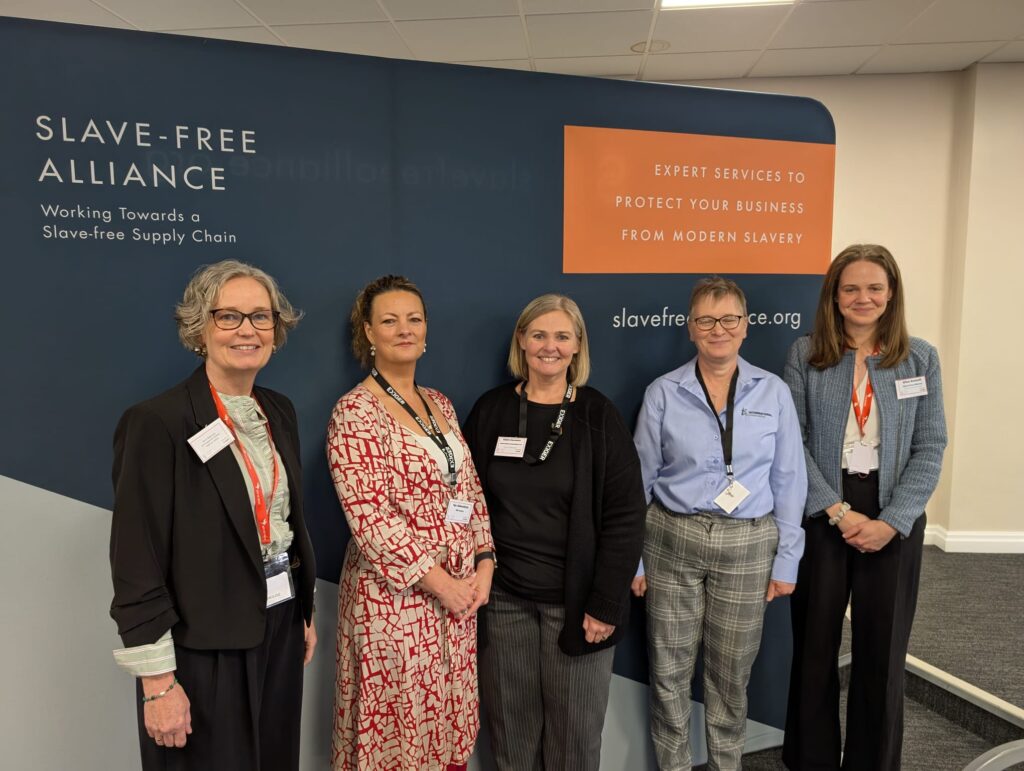
We were pleased to attend the Slave-Free Alliance Annual Conference in Manchester last week, taking away valuable insights, practical ideas and fresh perspectives on strengthening efforts to tackle modern slavery and worker exploitation.
This year’s theme, ‘From Membership to Impact’, prompted important discussions about moving beyond policies and compliance towards meaningful action and lasting change.
One topic that particularly stood out to us was the role of social auditors in giving workers a voice.
Auditors are often uniquely positioned within supply chains, with opportunities to speak directly with workers, understand their lived experiences, and identify risks that may otherwise remain hidden. In many respects, they are the eyes and ears of buyers within their supply chains and an important amplifier of workers’ voices.
But effective social auditing goes beyond identifying non-compliances. It means:
- Listening to workers and creating opportunities for meaningful, confidential engagement.
- Recognising indicators of modern slavery and other human rights risks.
- Looking beyond documentation through observation, questioning and triangulation.
- Challenging assumptions and identifying issues that may otherwise go unnoticed.
- Ensuring audit findings translate into meaningful corrective action and continuous improvement.
The conference also came at an important time for responsible business conduct. The UK Government has recently announced a significant shift in its approach, committing to introduce mandatory human rights due diligence alongside new powers to address goods made with forced labour.
We were particularly interested to hear from George Foster, Chair of the Office for Responsible Business Conduct, about what these developments could mean for businesses.
A key takeaway was the importance of challenging our own assumptions. This means considering not only what audit findings and documented processes tell us but also gaining a clearer understanding of workplace conditions through meaningful engagement with workers.
We also gained practical ideas on how to bring these insights into our own worker interviews, helping us better understand workers’ experiences, encourage open conversations, and identify potential risks.
Ultimately, an audit should not simply be about identifying non-compliance. It should help us understand what is really happening and what needs to change.
When auditors listen effectively, recognise the signals and communicate what they see, they can help buyers make better-informed decisions, strengthen human rights due diligence and, most importantly, drive action that makes a genuine difference to workers.
Thank you to Slave-Free Alliance for bringing together such a knowledgeable group and creating an opportunity to share experiences and learn from one another.
There is plenty to reflect on and, more importantly, to take forward into 2027 and beyond.


